
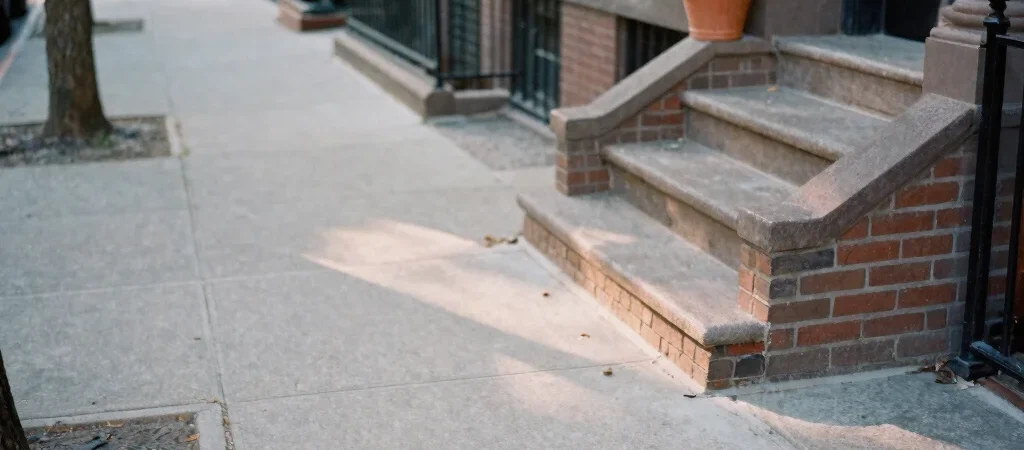
A short walk can change character at the cracked square of pavement around a street tree. You step aside for a stroller, slow down at a red light, and pass a stoop where someone has left a pair of muddy boots to dry. The sidewalk is a route, but it is also where a neighborhood becomes legible at walking speed.
The details set the pace
The quickest path is not always the one people choose. A shaded block may beat a shorter stretch without trees; a wide corner can feel easier to cross with a grocery bag in each hand. These small conditions shape a walk more convincingly than a map’s clean line from one address to another.
Public space at human scale
Sidewalk life depends on the narrow strip between private doors and moving traffic. A bench, a stoop, or a shop window gives someone a reason to pause without claiming the whole street. Even a brief greeting across that threshold can make the block feel less like a corridor and more like a place people inhabit.
Take the familiar route slowly
Try walking a familiar errand without checking the time for one block. Notice the paving repairs, the tree that leans toward the curb, and where the afternoon sun falls on the brick. The route may not be remarkable, and that is the point: a neighborhood is often made from details too close to register when we hurry past them.