
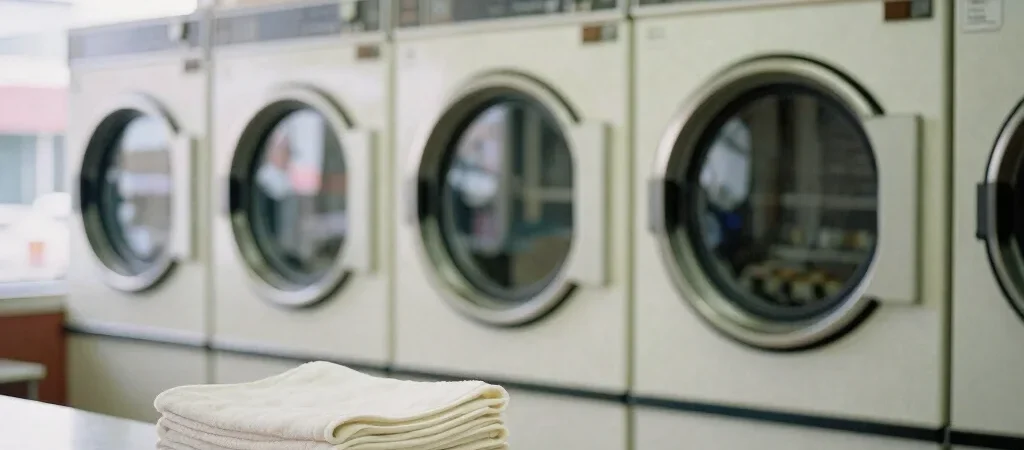
The laundromat has its own clock: a row of round windows turning shirts, towels, and sheets through the same repeated cycle. A basket claims a patch of floor. Someone checks a phone, then looks up as a dryer door opens. For a while, everyone is here for the same unglamorous reason.
Waiting becomes the activity
At home, laundry can disappear into the background; in a laundromat, the process takes up the room. You sort colors beneath fluorescent lights, keep an eye on the remaining minutes, and decide whether there is time to step out for a coffee. The work is ordinary, but its visible rhythm makes it easier to notice.
Small courtesies matter
The shared space runs on modest negotiations: leaving a machine free when a cycle ends, making room at the folding counter, or asking before moving someone else’s basket. None of these gestures needs to become a conversation. They are a form of attention suited to a room where people may prefer to keep to themselves.
A pause with edges
There is a beginning and an end to this kind of waiting. The machine stops; warm clothes come out; the basket gets heavier on the way home. In between, a laundromat gives the day a pocket of time with no useful disguise. It is enough to fold a shirt carefully and let the next cycle begin.